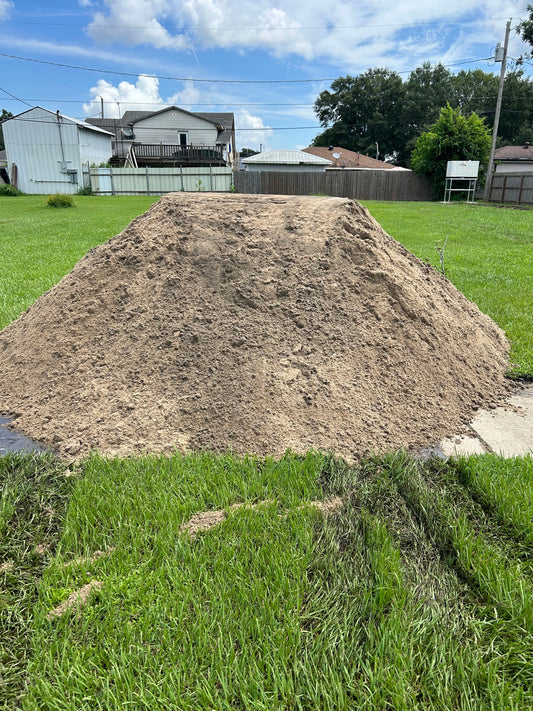
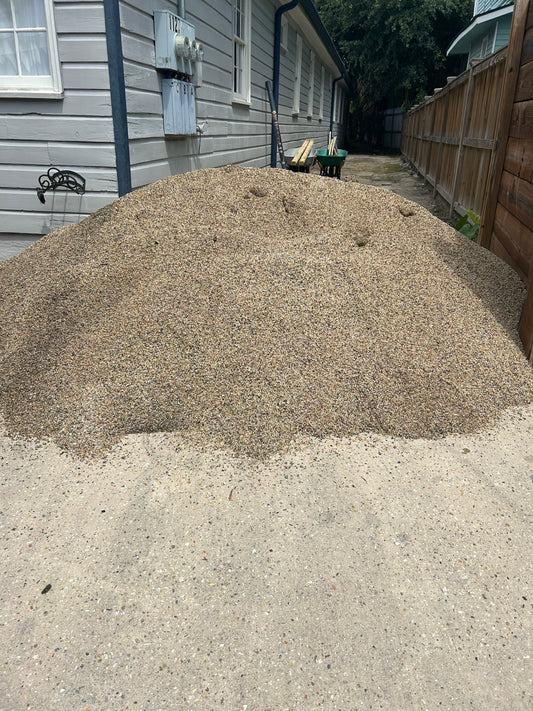
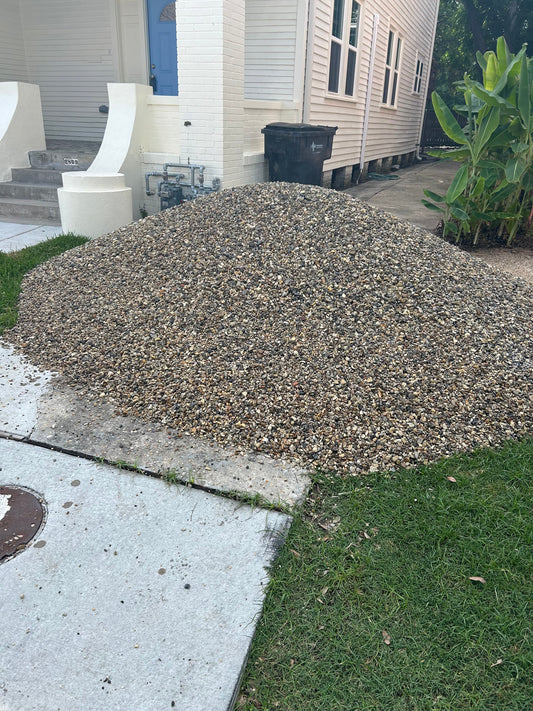
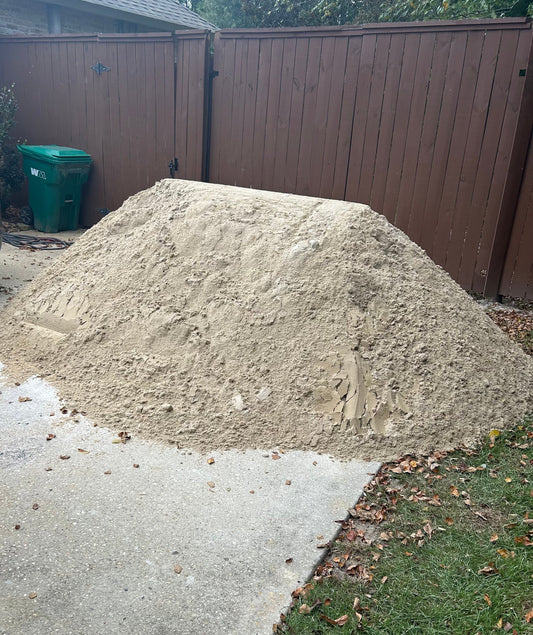
Whether you're putting in a gravel driveway, pouring a concrete slab, or laying a paver patio, the part nobody sees, the base, determines how long the surface lasts. On the Mississippi Gulf Coast, where soils are sandy and rain is heavy, a well-built base is what keeps your driveway or slab from settling, cracking, and rutting. Here's how to do it right.
Why the base matters
A driveway or slab is only as stable as what's underneath it. A proper base does three jobs: it spreads the load so weight doesn't concentrate in one spot, it provides drainage so water doesn't pool and soften the ground, and it gives you a firm, level surface to build on. Skip the base or build it thin, and you'll see the failure within a year or two.
Step 1: Excavate and grade
Start by clearing the area of grass, roots, and loose topsoil, that organic material will rot and settle. Dig down enough to fit your base layers plus the surface. For a driveway, that's often 8 to 12 inches total. Grade the bottom of the excavation with a slight slope so water drains away from any structure.
Step 2: Build the base layer
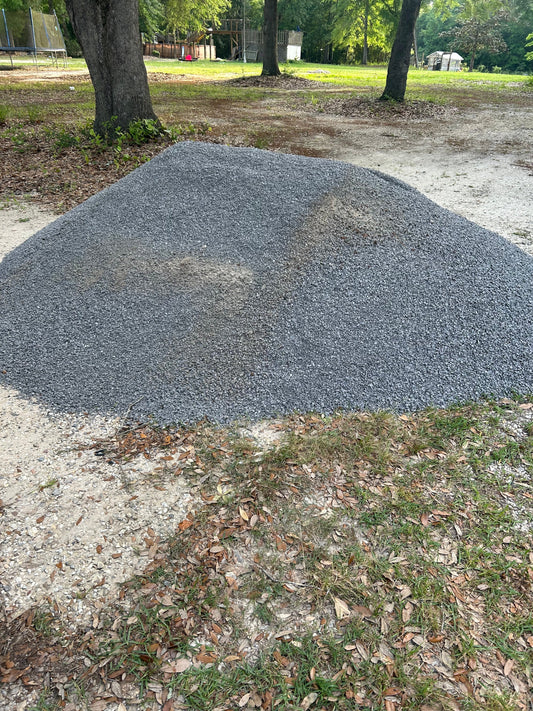
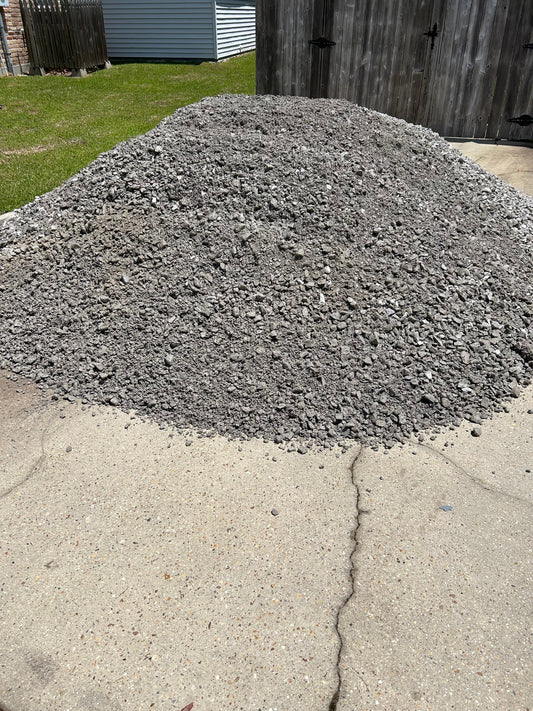
The workhorse of a good base is dense-graded crushed stone. Our #610 crushed limestone is the standard choice, it blends stone with fine dust so that when compacted, the dust locks the stones together into a hard, stable layer. Spread it in lifts of about 3 to 4 inches and compact each lift before adding the next. Compacting in thin layers is far more effective than dumping it all at once.
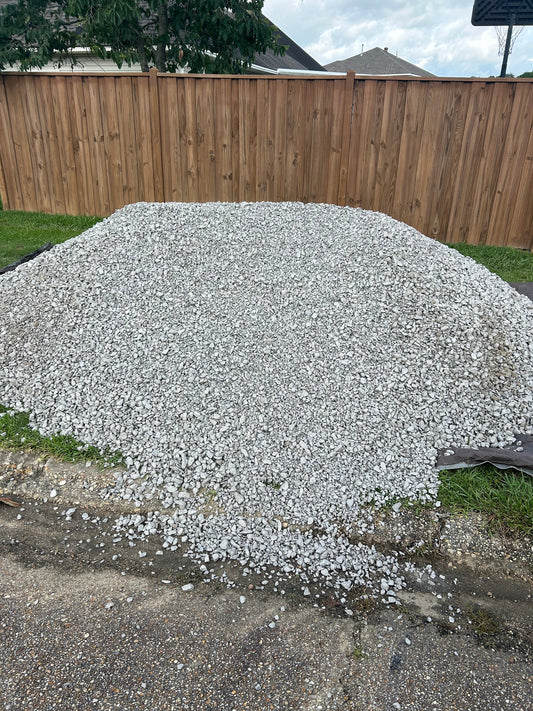
For a base that also needs to move a lot of water, a layer of clean, open-graded #57 stone can help drainage. Our guide on #57 vs #89 vs #610 explains when to use each grade.
Step 3: Add the surface
What goes on top depends on the project:
- Gravel driveway: finish with a layer of river gravel or a clean crushed stone for a tidy driving surface.
- Concrete slab: pour directly over the compacted #610 base.
- Paver patio or walkway: top the base with a setting bed of mason sand, then lay your pavers.
Gulf Coast considerations
- Plan for water. Our heavy rains mean drainage is not optional. Slope the base and surface so water runs off.
- Account for sandy soil. Loose, sandy ground compacts and shifts. A thicker, well-compacted stone base bridges over soft soil.
- Compact thoroughly. A rented plate compactor pays for itself in a base that doesn't settle.
Estimating your materials
Calculate each layer separately: measure length x width x layer depth, convert to cubic yards, then to tons. Our driveway gravel calculator guide shows the math step by step.
Order your base materials
Avanni delivers crushed limestone, gravel, and sand by the ton with no minimum order, across Harrison and Hancock counties Monday through Saturday. For help sizing a multi-layer base, call (985) 205-3396 or use our quote request page.